Showing posts with label Telescopes. Show all posts

Sunday, July 5, 2026

Inside the Simonyi Survey Telescope Dome

Inside the Simonyi Survey Telescope dome
Click the image for higher resolution (5.3 MB)

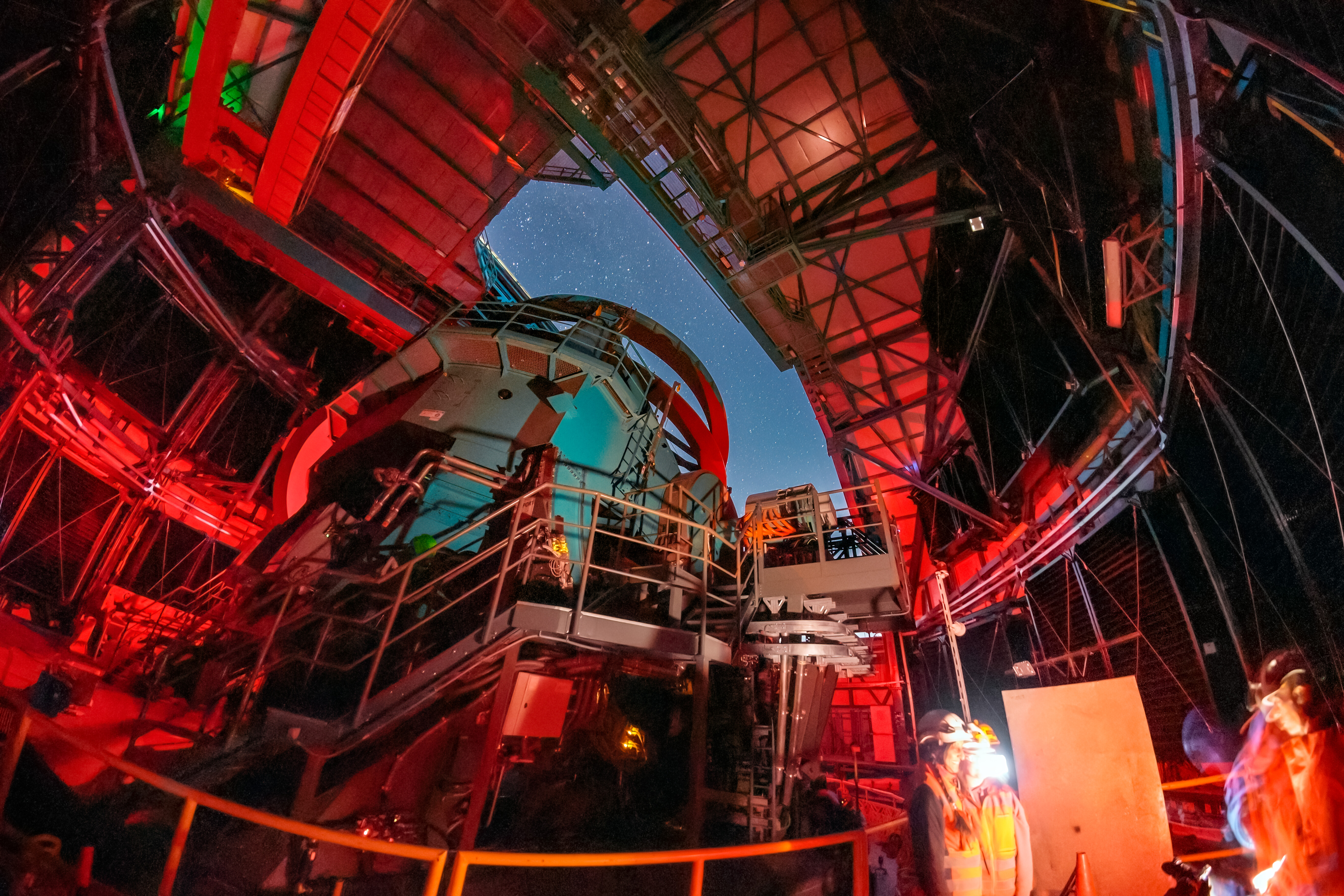
NSF–DOE Vera C. Rubin Observatory, jointly funded by the U.S. National Science Foundation (NSF) and the U.S. Department of Energy's Office of Science (DOE/SC), is captured here beginning its first night of on-sky observations with the LSST Camera as night settles across the sky. This long-exposure image gives us a great sense of the observatory’s scale, with three people on the gangway in the lower-right corner. Petr Horálek, NOIRLab Audiovisual Ambassador, captured this image during the on-sky commissioning of the camera on 15 April 2025.
The teal telescope mount for Rubin's Simonyi Survey Telescope was built in Spain and shipped in pieces to its current residence on Cerro Pachón in the foothills of the Chilean Andes. There, engineers and technicians reassembled the mount on the telescope pier inside the observatory over four years, partially amid the COVID-19 pandemic. The mount may look somewhat similar to other telescopes, but it incorporates a unique three-mirror design that makes the entire telescope much shorter and gives it a lower center of gravity. This unique design allows the mount to precisely hold and quickly move the mirrors and LSST Camera, the largest digital camera ever built. The weight of the mount, mirror, and camera totals 350 metric tons (386 US tons).
Photo Credit: NSF–DOE Vera C. Rubin Observatory/NOIRLab/SLAC/AURA/P. Horálek (Institute of Physics in Opava)

Saturday, August 3, 2024

The M1 Cell inside of the ELT Dome

The M1 Cell inside of the ELT Dome
Click the image for higher resolution (3.6 MB)

ESO's Extremely Large Telescope (ELT) will have a primary mirror (M1) that weighs 200 tons, about as much as the largest blue whales! This colossal mirror will rest on the structure that is shown under construction in this picture, taken with a drone on July 2024.
M1 will be the largest segmented mirror ever built for a telescope, but will need to move constantly and very smoothly during observations while keeping its optical shape, and therefore needs to be held by a cell that is both lightweight and sturdy. Enter the throne that will eventually seat this segmented mirror: the M1 cell seen here. It will hold 798 hexagonal segments that will work together as a single 39-m mirror, staying aligned as the telescope moves, even under varying gravity loads, wind conditions, vibrations or changes in temperature. German company SCHOTT has cast and delivered all these segment blanks, which are now being carefully polished by Safran Reosc in France. More than 70 segments have completed their trip to Chile, where they will be coated with a reflective layer of protected silver.
The M1 cell has openings and walkable areas underneath the mirror supports that provide access to each segment for maintenance. It is just the lowest portion of the impressive altitude structure that will eventually host all five of the ELT's mirrors. The hole in the center of the lattice, visible in the image, will one day house the central tower that holds the M3, M4, and M5 mirrors.
The ELT is expected to see first light later this decade, when this hard work will yield a telescope capable of tackling the biggest scientific challenges of our time.
Photo Credit: ESO/G. Vecchia

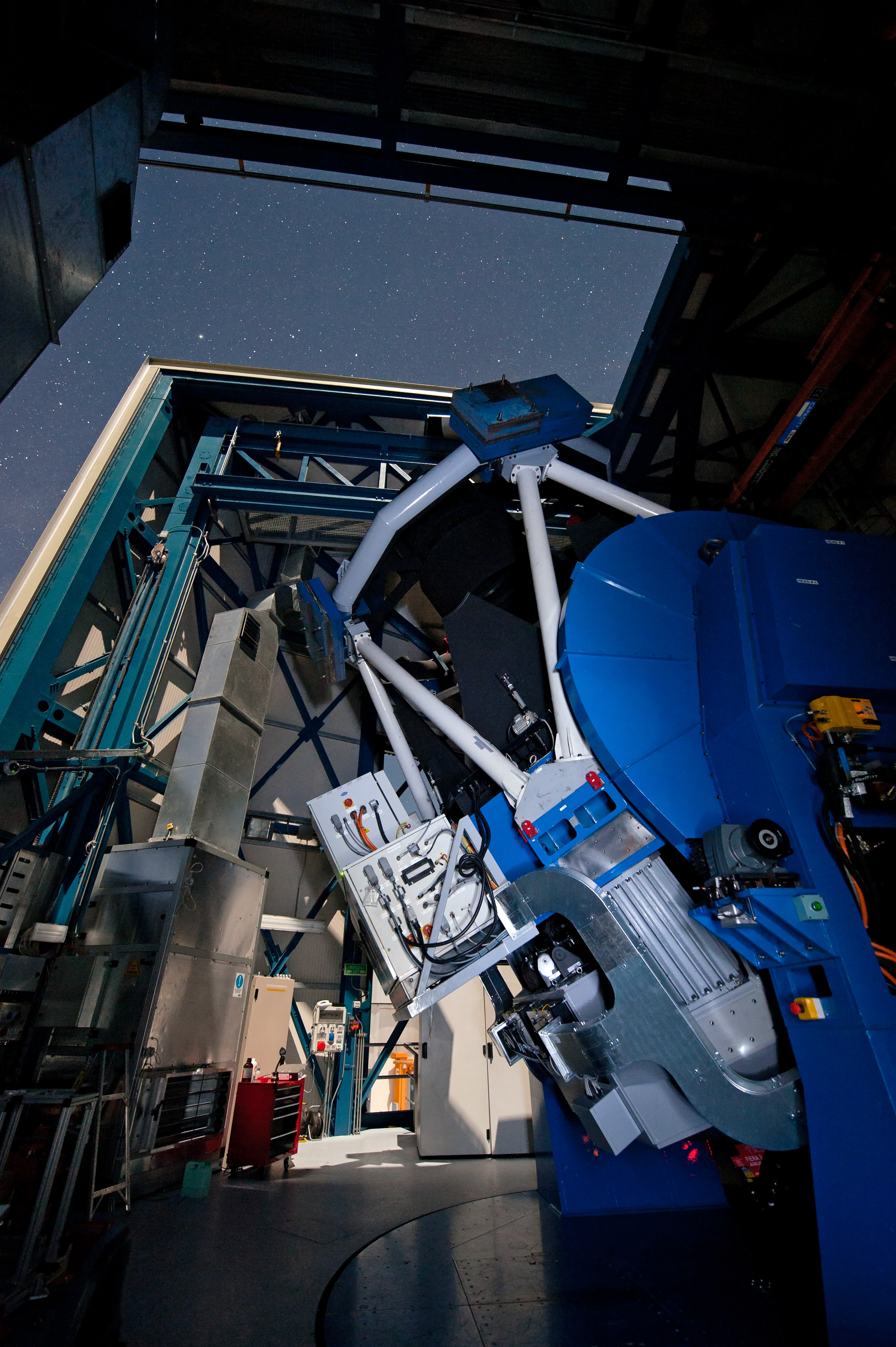
Simonyi Survey Telescope Mount

Simonyi Survey Telescope Mount
Click the image for higher resolution (1.3 MB)

The Simonyi Survey Telescope mount at the Vera C. Rubin Observatory on Cerro Pachón in Chile.
Photo Credit: Rubin Observatory/NOIRLab/NSF/AURA/H. Stockebrand

Thursday, May 2, 2019

Multiple Laser Guide Stars on the VLT

Multiple Laser Guide Stars on the VLT
Click on the image for higher resolution (4.6 MB)

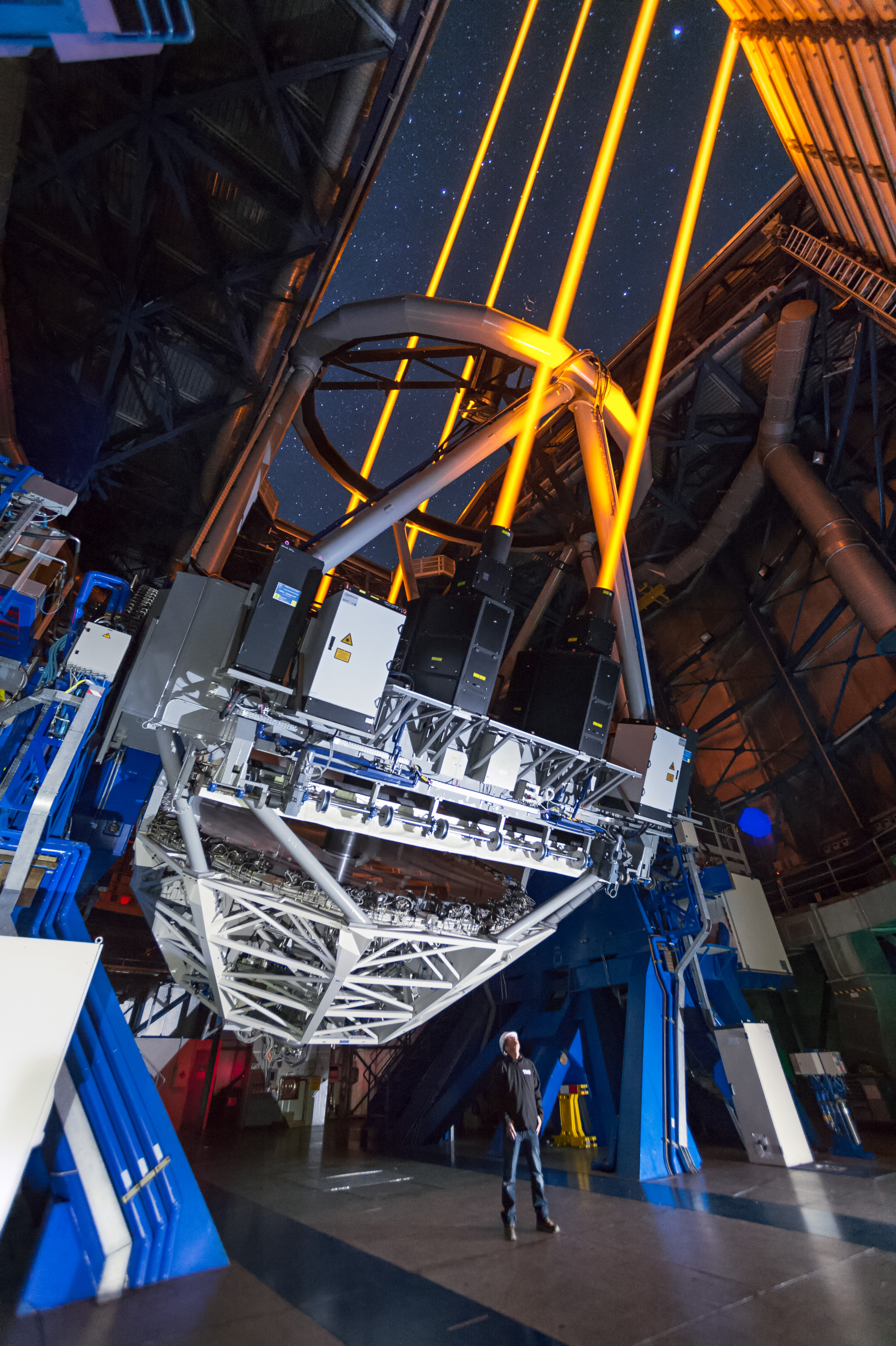
Glistening against the awesome backdrop of the night sky above ESO's Paranal Observatory, four laser beams project out into the darkness from Unit Telescope 4 (UT4) of the Very Large Telescope (VLT); they are the most powerful laser guide stars ever used in astronomy. Some 90 kilometres up in the atmosphere, the lasers excite atoms of sodium, creating artificial stars for the telescope's adaptive optics systems.
Modern telescopes use adaptive optics systems to compensate for the blurring effect of the Earth's atmosphere. To do this, the telescope needs to be able to see a bright reference star while it is observing its main target. However, there is not always a suitably bright star nearby, so astronomers use lasers to create artificial stars exactly where they need them. Sodium atoms high in the atmosphere are made to glow by the action of the lasers, forming tiny patches of light that mimic real stars.
Using multiple lasers simultaneously allows the atmosphere's properties to be better characterised – resulting in a much better image quality in a larger field of view where the image is corrected – than is possible with just one laser. The four lasers just fitted to UT4 serve one of the most sophisticated laser guide star systems ever built and are an example of how ESO enables European industry to lead complex research and development projects. The new lasers will permit the VLT to produce very sharp images, almost at the diffraction limit of the telescope. With this new facility, the Paranal Observatory continues to have the most advanced and the largest number of adaptive optics systems in operation today. This new system will also pave the way for a similar system on ESO's forthcoming European Extremely Large Telescope, the world's biggest eye on the sky.
Image Credit: ESO/F. Kamphues
Image enhancement: Jean-Baptiste Faure

Monday, April 16, 2012

The VST: World's Largest Visible Light Survey Telescope!

The VST: World's Largest Visible Light Survey Telescope!
Click on the image for full resolution (4.6 MB)

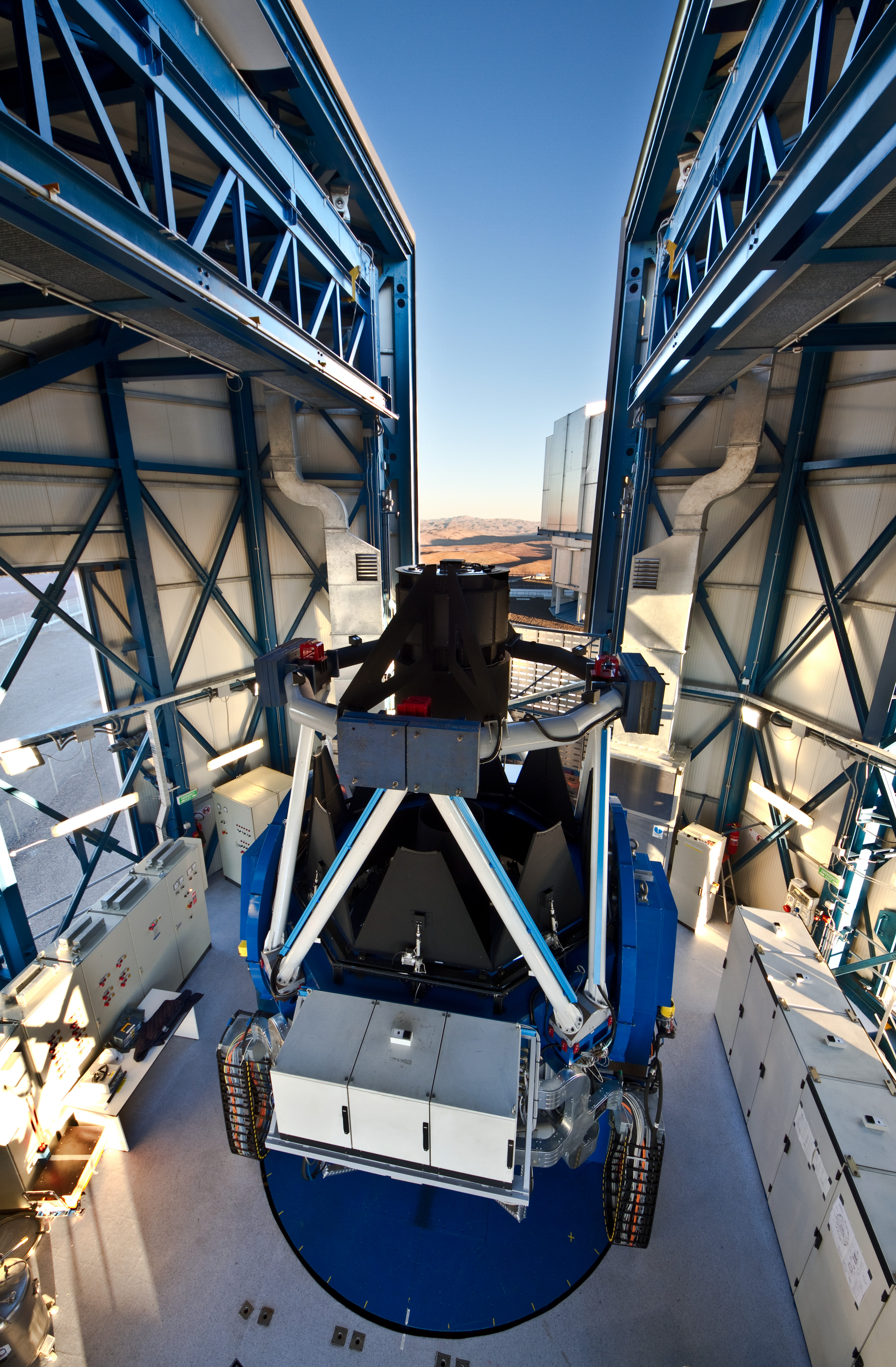
The VLT Survey Telescope (VST) is the latest telescope to be added to ESO's Paranal Observatory in the Atacama Desert of northern Chile. It is housed in an enclosure immediately adjacent to the four VLT Unit Telescopes on the summit of Cerro Paranal. The VST is a 2.6-meter wide-field survey telescope with a field of view twice as broad as the full Moon. It is the largest telescope in the world dedicated to sky surveys in visible light. The VST was designed and built by the INAF–Osservatorio Astronomico di Capodimonte, Naples, Italy as part of a joint venture between INAF and ESO.
The full resolution image weighs 4.6 MB, so please be patient when downloading!
Credit: ESO/G. Lombardi
Image enhancement: Jean-Baptiste Faure

Thursday, April 12, 2012

The 3.5-meter WIYN Telescope at Sunset

The 3.5-meter WIYN Telescope at Sunset
Click on the image for full resolution

The WIYN telescope building against a sunset sky, with interior light on the telescope. The WIYN Observatory is owned and operated by the WIYN Consortium. Its telescope, a 3.5-meter instrument, is the newest and second largest telescope on Kitt Peak in Arizona. Most of the capital costs of the observatory were provided by the University of Wisconsin–Madison, Indiana University, and Yale University, while the National Optical Astronomy Observatory provides most of the operating services.
Credit: Mark Hanna/NOAO/AURA/NSF
Image enhancement: Jean-Baptiste Faure

Friday, October 14, 2011

The E-ELT on Cerro Armazones (artist's impression)

The E-ELT on Cerro Armazones (artist's impression)
Click on the image for full resolution (2.7 MB)

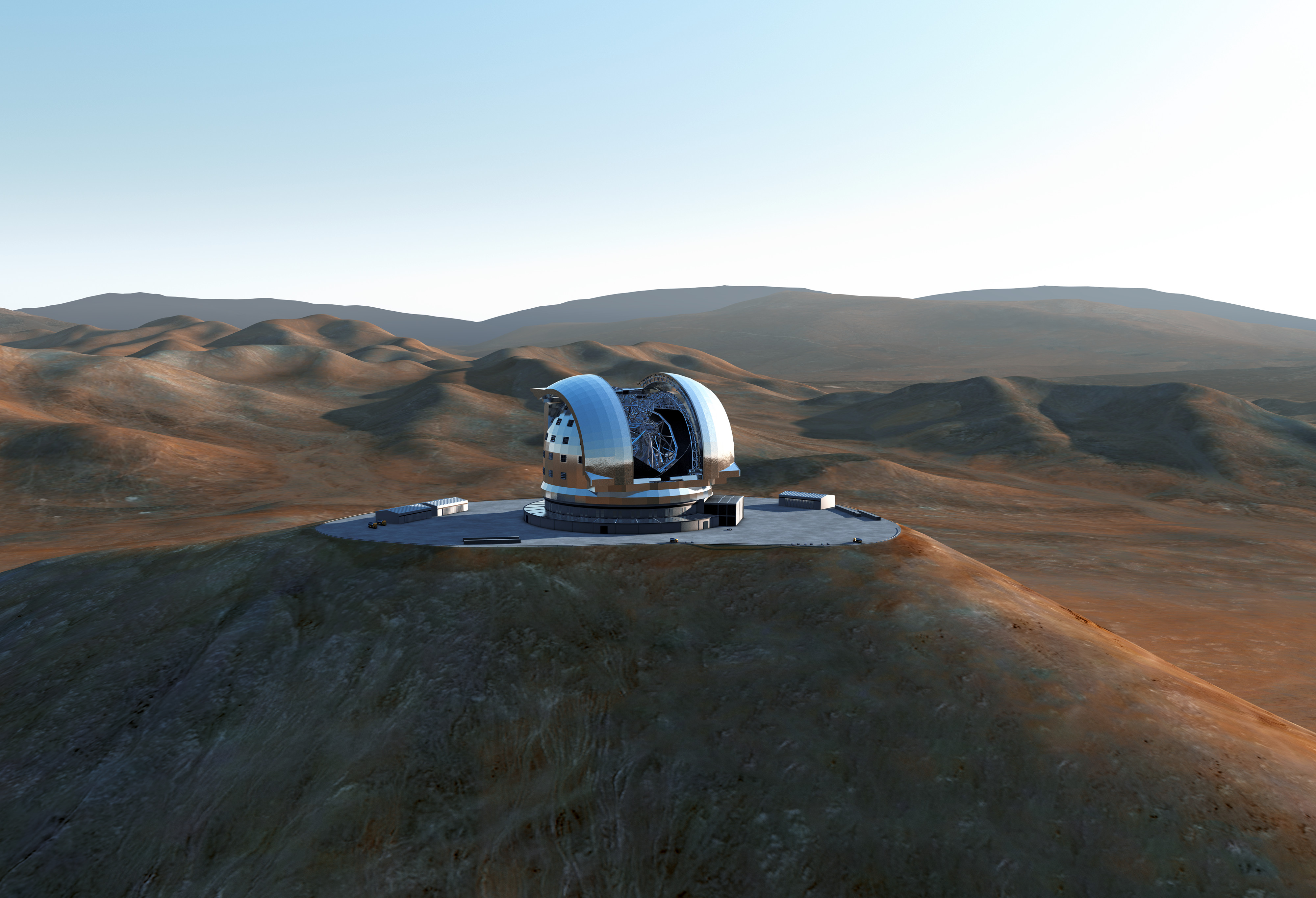
Artist's impression of the European Extremely Large Telescope (E-ELT) on Cerro Armazones, a 3060-meter mountaintop in Chile's Atacama Desert. The E-ELT will be the largest optical/infrared telescope in the world - the world's biggest eye on the sky.
The full resolution image weighs 2.7 MB, so please be patient when downloading!
Credit: ESO

Sunday, September 18, 2011

Four ALMA antennas on Chajnantor under the Milky Way

Four ALMA antennas on Chajnantor under the Milky Way
Click on the image for full resolution (6.0 MB)

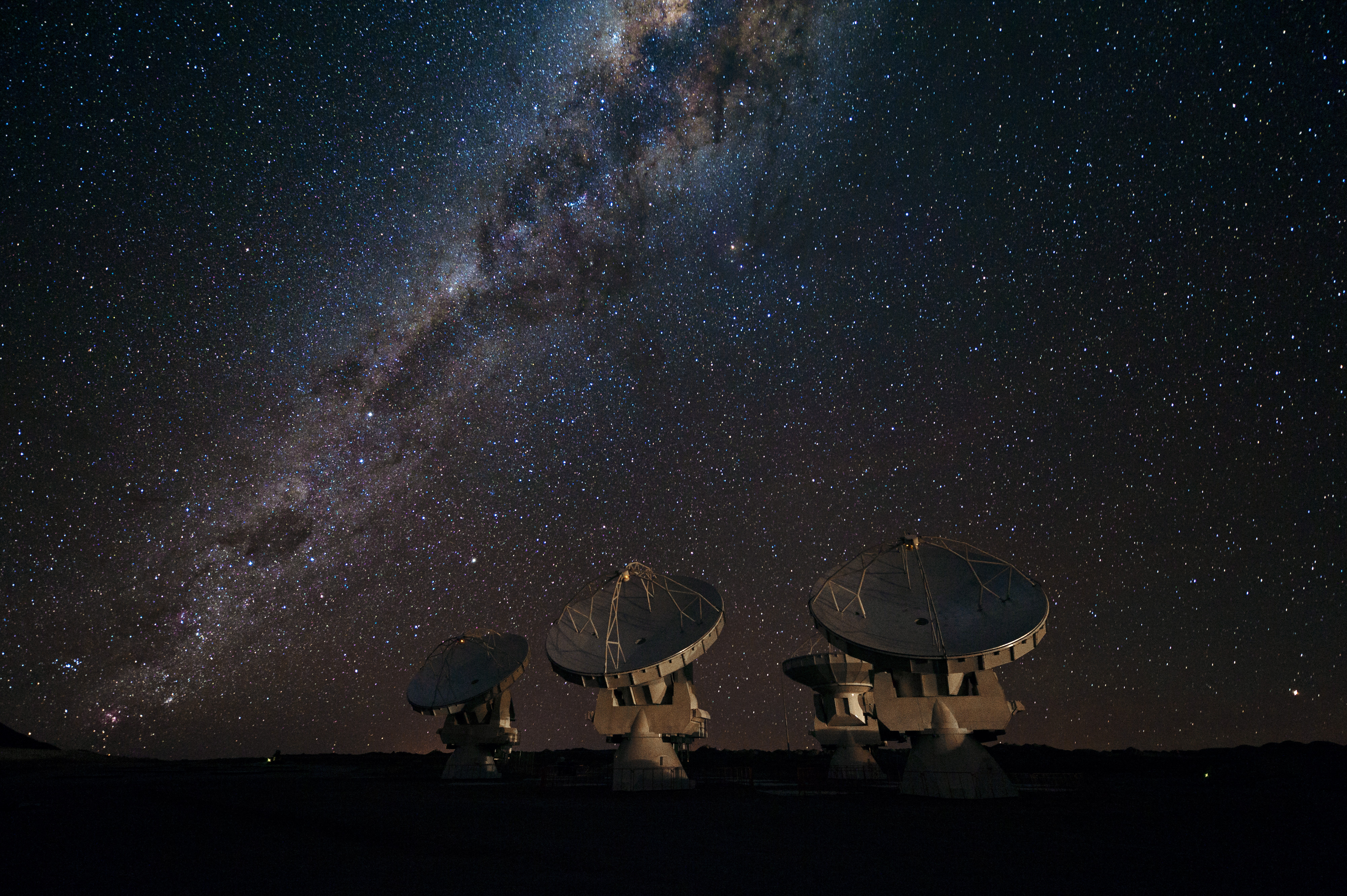
Four of the first ALMA antennas at the Array Operations Site (AOS), located at 5000 meters altitude on the Chajnantor plateau, in the II Region of Chile. Three of them - those which are pointing in the same direction - are being tested together as part of the ongoing Commissioning and Science Verification process. Across the image in the background is the impressive plane of the Milky Way, our own galaxy, seen in the sky edge-on. The centre of our galaxy is partially visible as a yellowish bulge crossed by dark lanes, at the upper edge of the image. The dark lanes are huge clouds of interstellar dust that lie in the disc of the galaxy. While opaque in visible light, they are transparent at longer wavelengths, such as the millimetre and submillimetre radiation detected by ALMA. ALMA, the Atacama Large Millimeter/submillimeter Array, is the largest astronomical project in existence and is a truly global partnership between the scientific communities of East Asia, Europe and North America with Chile. ESO is the European partner in ALMA.
The full resolution image weighs 6.0 MB, so please be patient when downloading!
Credit: ESO/José Francisco Salgado (josefrancisco.org)

Saturday, September 17, 2011

The VLT Survey Telescope will survey the visible-light sky

The VLT Survey Telescope will survey the visible-light sky
Click on the image for full resolution (4.8 MB)

The VLT Survey Telescope (VST) at Cerro Paranal. The VST is a state-of-the-art 2.6-meter telescope equipped with OmegaCAM, a monster 268 megapixel CCD camera with a field of view four times the area of the full Moon. It will survey the visible-light sky. The VST is the result of a joint venture between ESO and the Capodimonte Astronomical Observatory (OAC) of Naples, a research centre of the Italian National Institute for Astrophysics (INAF).
The full resolution image weighs 4.8 MB, so please be patient when downloading!
Credit: ESO/G.Hüdepohl (atacamaphoto.com)

Friday, December 17, 2010

The 8.2-m Very Large Telescope main mirrors: near-perfect optics

The 8.2-m Very Large Telescope main mirrors: near-perfect optics
Click to enlarge

This photo shows the fourth 8.2-meter VLT Zerodur mirror during the final phase of polishing at French company REOSC. On December 14, 1999, REOSC, the Optical Department of the SAGEM Group, finished the polishing of the fourth 8.2-meter main mirror for the Very Large Telescope (VLT) of the European Southern Observatory. The mirror was delivered to ESO at a ceremony at the REOSC factory in Saint Pierre du Perray, just south of Paris. The precision of the form of the mirror that was achieved during the polishing process is 8.5 nanometer (1 nanometer = 1 millionth of a millimetre) over the optical surface. This exceptional value corresponds to an optical resolution (theoretical image sharpness) of 0.03 arcseconds in the visible spectrum. This corresponds to distinguishing two objects separated by only 15 cm at a distance of 1000 km and it allows to detect astronomical objects that are 10,000 million times fainter than what can be perceived with the unaided eye. The other three VLT primary mirrors were polished to a comparable precision. REOSC was also in charge of the polishing process of the twin 8-meter Gemini North and South primary mirrors and of the 3.6-meter primary mirror for the Canada-France-Hawaii Telescope (CFHT) on Mauna Kea, Hawaii.
Credit: ESO

Large Binocular Telescope Interferometer sees First Llight

Large Binocular Telescope Interferometer sees First Light
Click on the image to enlarge

The Large Binocular Telescope Interferometer saw "first light" in the beginning of this month. The Large Binocular Telescope Interferometer has taken its first images of the star Beta Peg in the constellation Pictor - an encouraging start for an instrument designed to probe the cosmic neighborhoods where Earth-like planets could exist.
Eight years in development, the NASA-funded instrument combines beams of light from twin 8.4-meter (28-foot) mirrors mounted atop the Large Binocular Telescope on Mount Graham, Arizona, USA. Together, the two mirrors form the largest single-mount telescope in the world.
With this high-resolution imaging capability, astronomers hope to probe nearby solar systems - specifically, the areas in these systems where Earth-like planets with liquid water could exist. Though the Large Binocular Telescope Interferometer won't be able to detect Earth-size planets, it will be able to see dust disks that are indicative of planet formation, in addition to detecting large, Jupiter-size planets farther out from the star. These findings will help future, space-based exoplanet missions know where to search for Earth-like planets in our own galactic neighborhood.
With its ability to probe this "habitable zone" of other solar systems, the Large Binocular Telescope Interferometer will also complement the capabilities of other NASA missions - the Keck Interferometer, which can find dust very close to stars; and the Spitzer Space Telescope, which is adept at observing planet-forming dust that is much more distant.
With a major upgrade of the Large Binocular Telescope's adaptive optics system scheduled for next year, the interferometer will undergo testing and commissioning for the majority of 2011, and during that time, scientific observations will begin. The interferometer will be able to image exoplanets, but also extragalactic objects, nebulae and galaxies.
The Large Binocular Telescope Interferometer is funded by NASA and managed by Ben Parvin at NASA's Jet Propulsion Laboratory, Pasadena, California, as part of NASA's Exoplanet Exploration Program. The instrument and product development are provided by the University of Arizona, Tucson.
Credit: Large Binocular Telescope Observatory

Wednesday, December 15, 2010

ESO’s Very Large Telescope ready for a long observing night

ESO’s Very Large Telescope ready for a long observing night
Click on the image to enlarge

As soon as the Sun sets over the Chilean Atacama Desert, ESO's Very Large Telescope (VLT) begins catching light from the far reaches of the Universe. The VLT has four 8.2-meter Unit Telescopes such as the one shown in the photograph. Many of the photons - particles of light - that are collected have travelled through space for billions of years before reaching the telescope's primary mirror. The giant mirror acts like a high-tech "light bucket", gathering as many photons as possible and sending them to sensitive detectors. Careful analysis of the data from these instruments allows astronomers to unravel the mysteries of the cosmos.
The telescopes have a variety of instruments, which allow them to observe in a range of wavelengths from near-ultraviolet to mid-infrared. The VLT also boasts advanced adaptive optics systems, which counteract the blurring effects of the Earth's atmosphere, producing images so sharp that they could almost have been taken in space.
Credit: ESO/José Francisco Salgado

Thursday, November 25, 2010

The ESO's Very Large Telescope ready for the night at Paranal

The ESO's Very Large Telescope ready for the night at Paranal
Click on the image for full resolution (3.3 MB)

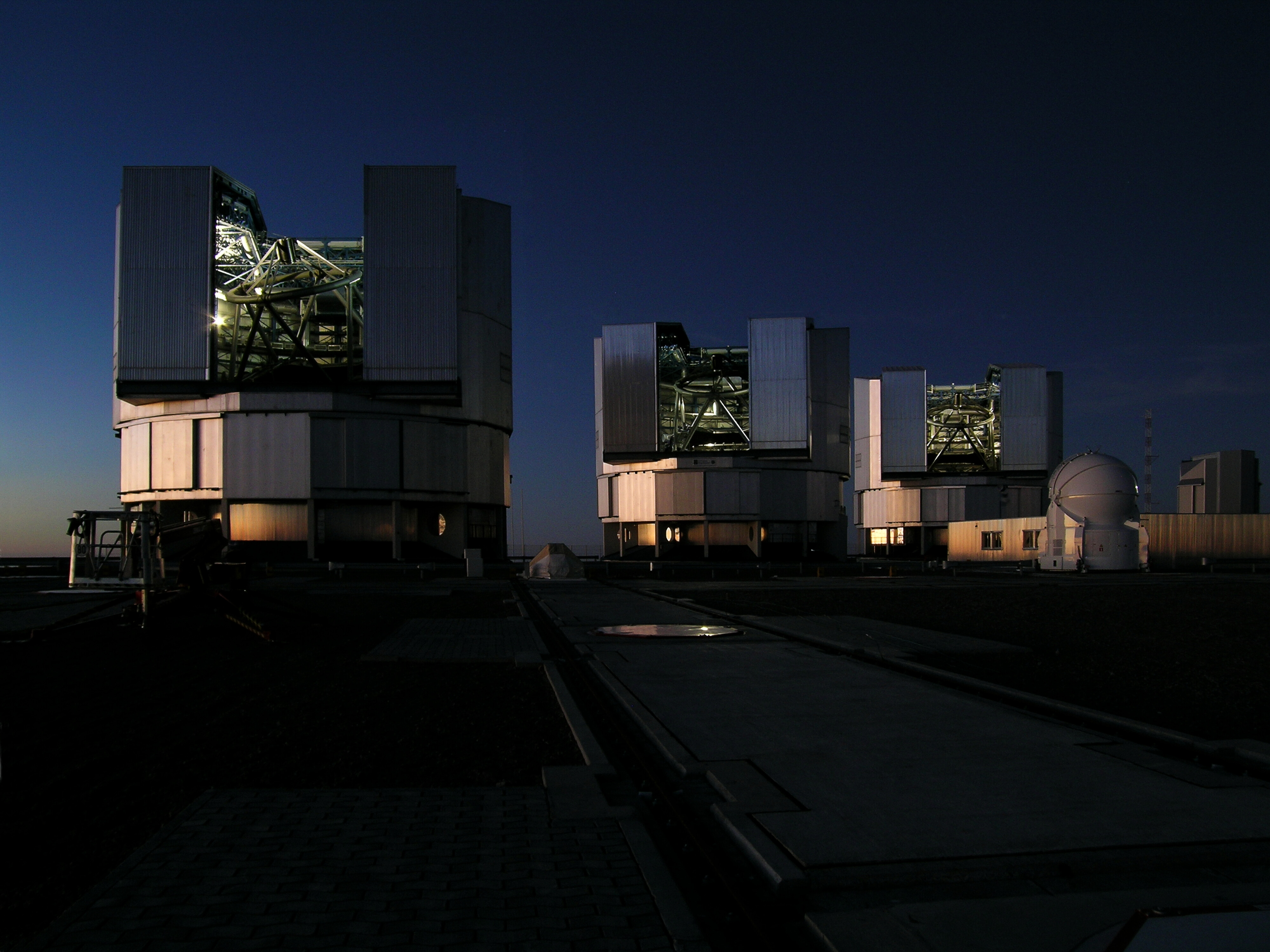
Three of the four Unit Telescopes of ESO’s Very Large Telescope (VLT) are shown here getting ready for another exceptional night of observations on top of Cerro Paranal, in Chile. Prior to every night, the engineers in charge go through a routine of manoeuvres to prepare the flagship facility of European astronomy. The VLT is the world’s most advanced optical instrument, consisting of four Unit Telescopes with main mirrors of 8.2-meter diameter and four movable 1.8-meter diameter Auxiliary Telescopes. One of the Auxiliary Telescopes is shown on the right of the image.
The full resolution image weighs 3.3 MB, so please be patient when downloading!
Credit: ESO/G.Hüdepohl - atacamaphoto.com

ESO's VISTA telescope with the VLT in the background at sunset

ESO's VISTA telescope with the VLT in the background at sunset
Click on the image for full resolution (3.8 MB)

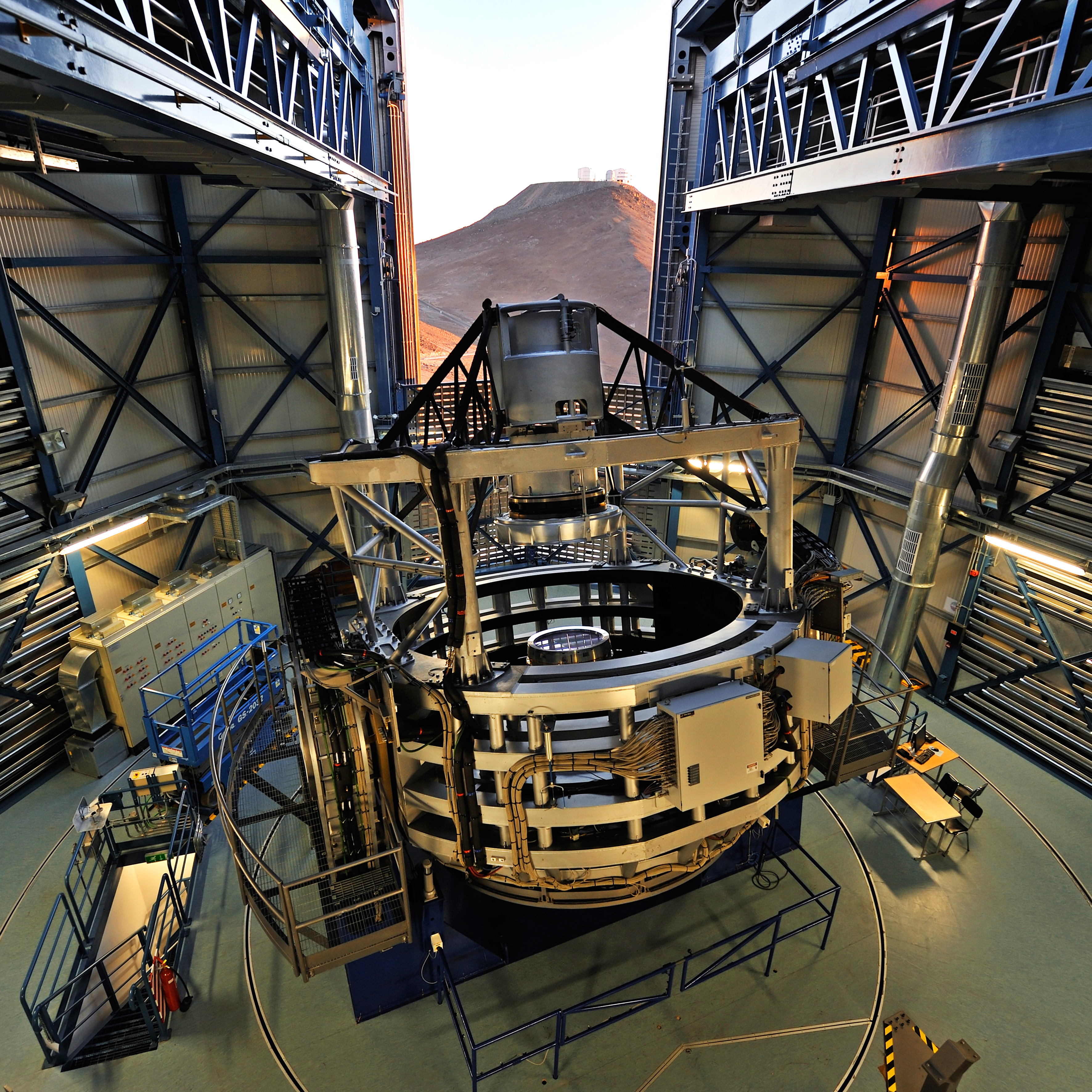
This spectacular view of the ESO's VISTA telescope was taken from the roof of the building during the opening of the enclosure at sunset. The VLT is visible on the neighbouring mountain. VISTA is the largest survey telescope in the world and it is dedicated to mapping the sky at near-infrared wavelengths. Its primary mirror is 4.1 metres in diameter and is the most highly curved of its size. The extremely high curvature reduces the focal length, making the structure of the telescope extremely compact. VISTA can map large areas of the sky quickly and deeply.
The full resolution image weighs 3.8 MB, so please be patient when downloading!
Credit: ESO/G.Hüdepohl (atacamaphoto.com)